
News
What are the advantages of LED lighting compared to traditional lighting
What are the advantages of LED lighting compared to traditional lighting
Compared to traditional lighting fixtures (incandescent, fluorescent, halogen lamps, etc.), LED lighting fixtures have significant advantages in energy consumption, lifespan, environmental friendliness, luminous efficacy, and flexibility of use. Specific comparisons are as follows: Extremely Low Energy Consumption and Significant Power Savings
This is the core advantage of LED lighting fixtures. At the same brightness, LED lights consume only 1/10 the power of incandescent lamps and 1/2 to 1/3 the power of fluorescent lamps.
For example, a 10W LED light has the same brightness as a 60W incandescent bulb and consumes only 1 kWh in 100 hours of use, while a 60W incandescent bulb consumes 1 kWh in just 17 hours. Long-term use can significantly reduce electricity costs.
Extended lifespan, reduced replacement frequency
LED lights have a rated lifespan of 20,000-50,000 hours, with some high-quality products reaching 80,000 hours; in comparison, incandescent bulbs have a lifespan of approximately 1,000 hours, fluorescent bulbs approximately 8,000 hours, and halogen bulbs approximately 2,000 hours.
Based on 5 hours of daily use, LED lights can last 10-27 years, requiring almost no frequent replacements, making them particularly suitable for installation on ceilings, at high altitudes, or other hard-to-access locations.
Environmentally friendly and pollution-free, free of harmful substances
Traditional fluorescent lamps (such as daylight lamps) and energy-saving lamps contain heavy metals such as mercury, which can pollute soil and water sources when broken, and are difficult to recycle; LED lights, on the other hand, do not contain toxic substances such as mercury and lead, and their body materials are mostly aluminum alloy and plastic, making them highly recyclable and meeting environmental protection requirements.
Furthermore, LED lights emit no ultraviolet (UV) or infrared (IR) radiation, posing no harm to skin, artifacts, or food, making them suitable for museums, supermarket fresh food sections, and similar settings.
High luminous efficacy and better light quality
Excellent color rendering: High-quality LED lights have a color rendering index (Ra) of 80-95 (or even higher), accurately reproducing the true colors of objects; while fluorescent lamps typically have a Ra index of 60-80, and incandescent lamps, although having good color rendering, have low luminous efficacy.
Flicker-free/low-flicker: High-quality LED lights use constant current drive technology, resulting in stable light with no noticeable flicker, reducing eye strain; traditional fluorescent lamps have high-frequency flicker, which can easily cause dry eyes and dizziness after prolonged viewing.
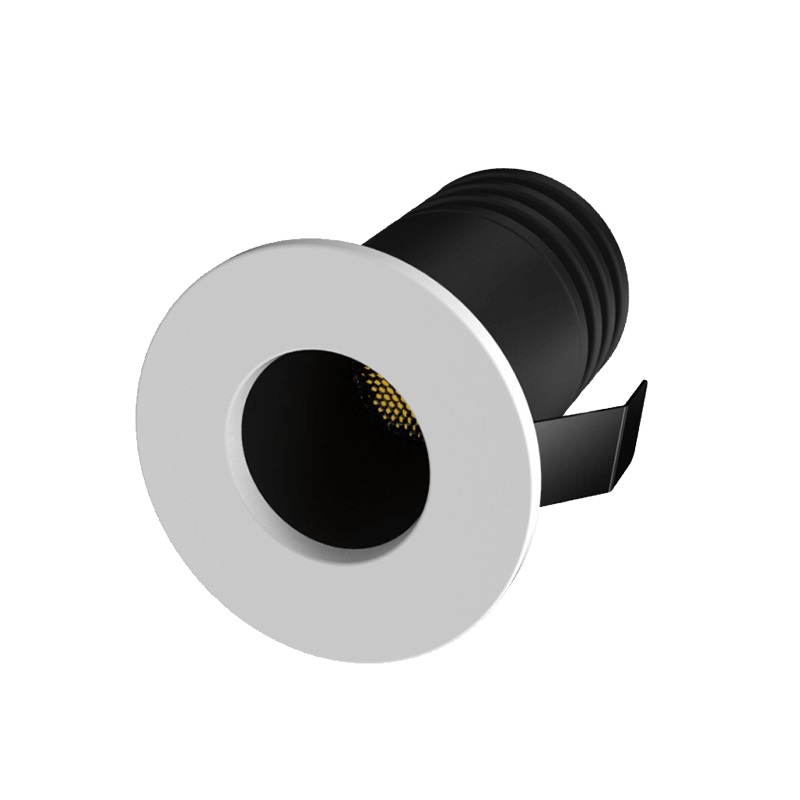
Strong directional light emission: LED lights can emit light directly in a directional manner, without the need for an additional reflector, resulting in high light utilization (e.g., spotlights, downlights); while traditional lamps emit light in a 360° direction, wasting most of the light.
Fast start-up speed and more flexible application scenarios
LED lights light up instantly after being powered on, with no start-up delay; while fluorescent lamps and energy-saving lamps require several seconds or even tens of seconds to warm up to reach rated brightness, and start up even slower in low-temperature environments.
Meanwhile, LED lights have a wide operating temperature range (-20℃ to 50℃), allowing them to function normally in low-temperature outdoor environments and cold storage facilities, while fluorescent lamps experience a significant drop in luminous efficacy at low temperatures.
Stable structure, shock and drop resistant. The core light-emitting element of LED lights is a semiconductor chip, and the lamp body is mostly made of aluminum alloy or plastic, without fragile parts such as glass shells or filaments, making them highly shock and drop resistant. In contrast, the glass bulbs of incandescent and halogen lamps are extremely fragile, posing a higher risk during transportation and use.
Shenzhen Covanns Technology Co., Ltd.
Cell Phone: +86-15386369403 (WhatsApp and WeChat)
Website: www.covanns.com






 English
 Send Email
 WhatsApp